1. General Introduction to Synch in Estonia
Estonia is a small country with a population of 1,3 million, which is naturally reflected in the limited size of the music industry and market. Furthermore, until regaining independence in 1991, the market was also fairly closed to international music industry trends and has resulted in relatively few companies specialising in music publishing beyond sheet music production and sales. Additionally, authors’ rights related to most synch uses (except for advertisements) have been represented by the Estonian Author’s Society (EAÜ), thus damping pressures from authors for more commercial representation through modern music publishing companies, including the negotiation of synch deals. The rights of performers are represented by the Estonian Performers Association (EEL) and the rights of (phonogram) producers are represented by the Estonian Association of Phonogram Producers (EFÜ).
Music publishing as a business has arguably been developing beyond rights administration and towards, among other things, finding creative opportunities for writers. The creation of audiovisual media and content has been growing and diver sifying, expanding the need for synching music. The Estonian music industry has become more international over the past 15 years, spurring new opportunities and needs concerning more contemporary music publishing and synch representation for Estonian music creators.
Over the past ten years, notably two companies specialising in music publishing in the contemporary sense, have been established. This has led to an increased emphasis on music synchronisation, fostering the growth of the synch market and unlocking the potential of Estonian artists and creators. The subject of synch has gained prominence over the past few years at industry events such as Tallinn Music Week, the Estonian Music Market’s Focus Day (Muusikaturu fookuspäev), and PÖFF Music Meets Film. Additionally, the topic has been extensively discussed with key stakeholders including the Estonian music export organization, Music Estonia, and one of the Estonian Collective Management Organisations, The Estonian Author’s Society (EAÜ).
1.1 Overall Synch Landscape
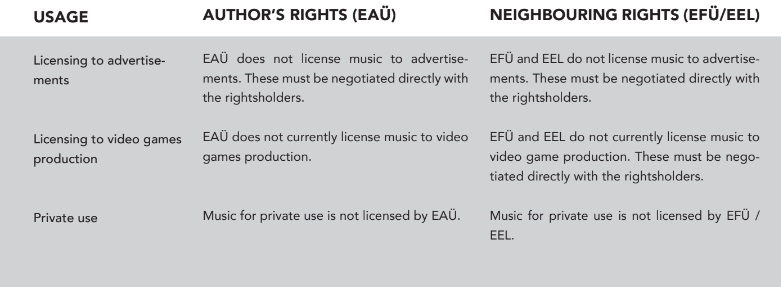
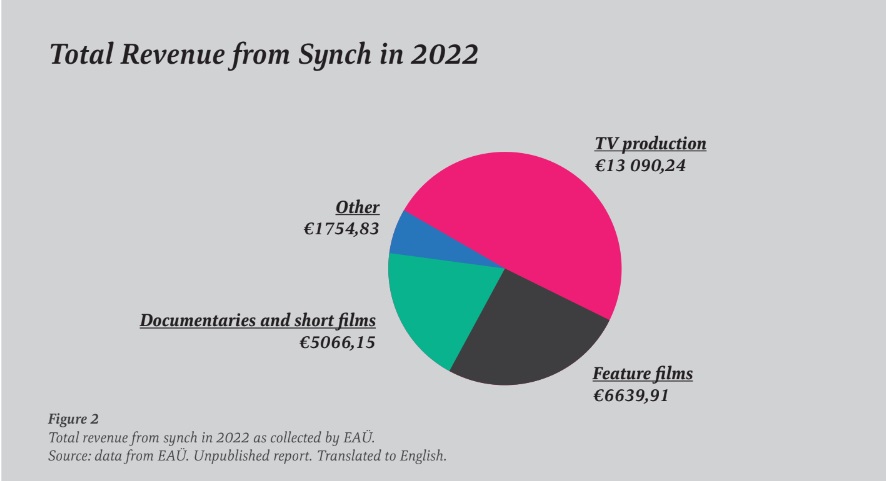
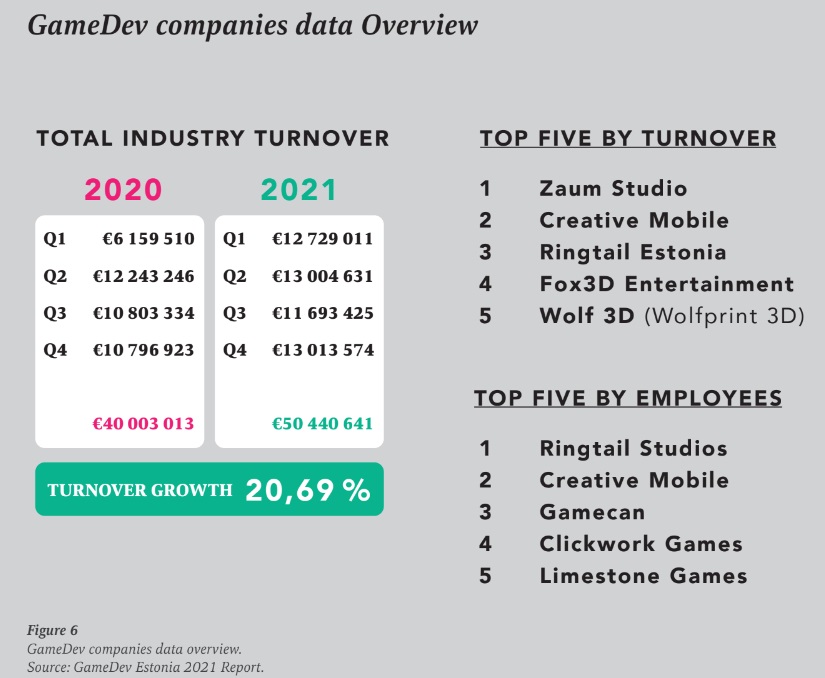
Commercially released music, in Estonia, is mainly licensed for film, TV and advertisements. There are also a few video game companies in Estonia, however, there is not a lot of collaboration between the gaming industry and music industry in terms of synch. Game developers, in Estonia and more generally, mainly use bespoke sound design or library music, rather than licensing existing tracks from artists1.
1| Based on interviews and conversations conducted by Virgo Sillamaa in 2018-2019 with the Estonian game developers community; and interviews with Jari-Pekka Kaleva and Konsta Klemetti in 2023.
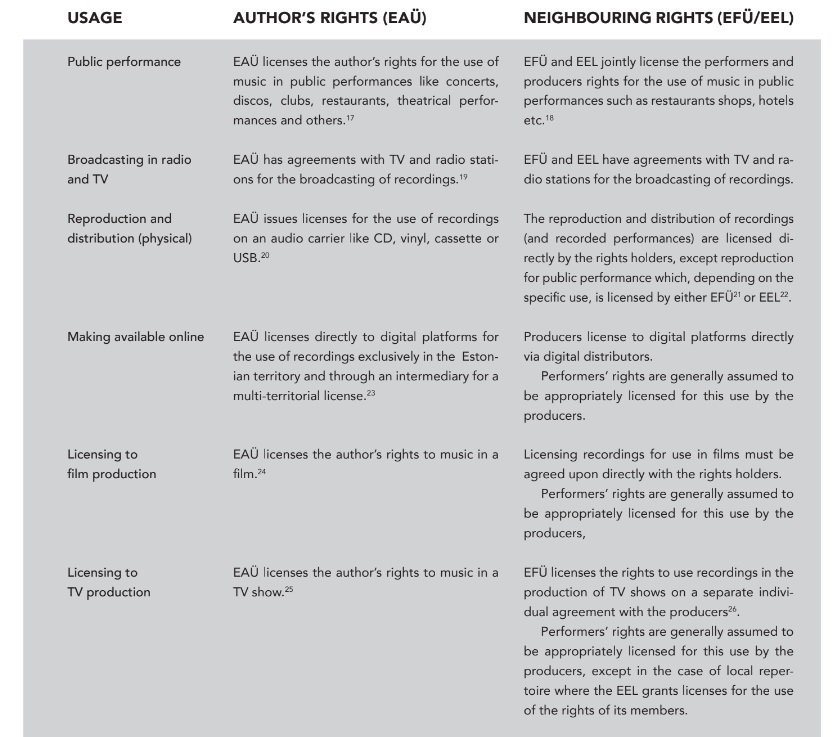
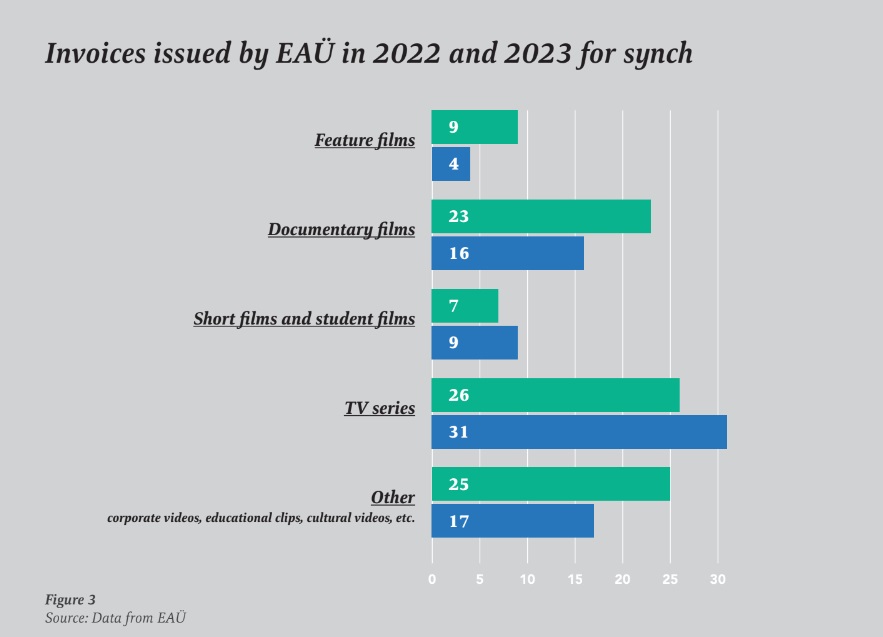
In Estonia, most synch licences for publishing rights can be obtained from the Estonian Author’s Society (EAÜ). In addition to the blanket licence for broadcasters, EAÜ also holds the rights to license their members‘ music into film and TV show productions. For the most part, master rights need to be licenced directly from the (phonogram) producers. There are a few exceptions, however, which will be explored in chapter 2.2.
Many professionals in the music sector, such as music publishers and the EAÜ staff, highlight a widespread lack of knowledge about synch licensing. This includes the understanding that you need to acquire two sets of rights, sometimes even three since it cannot always be assumed that the producer has all the needed agreements with the performers on the recording. Moreover, likely, many authors, artists and even producers do not know that publishing rights for most audiovisual media (except commercials) are controlled by EAÜ and not by the authors or publishers themselves (as is the industry norm in the United States and the UK).